 spinhire
Game Developer (Unity / HTML5)
Builds the games themselves — slots, crash games, live mechanics: the client side in Unity, Phaser or PixiJS plus the integration with the game server.
Game Developer (Unity / HTML5), Malta & Cyprus, middle: €3 800–5 200 per month gross · SpinHire data as of
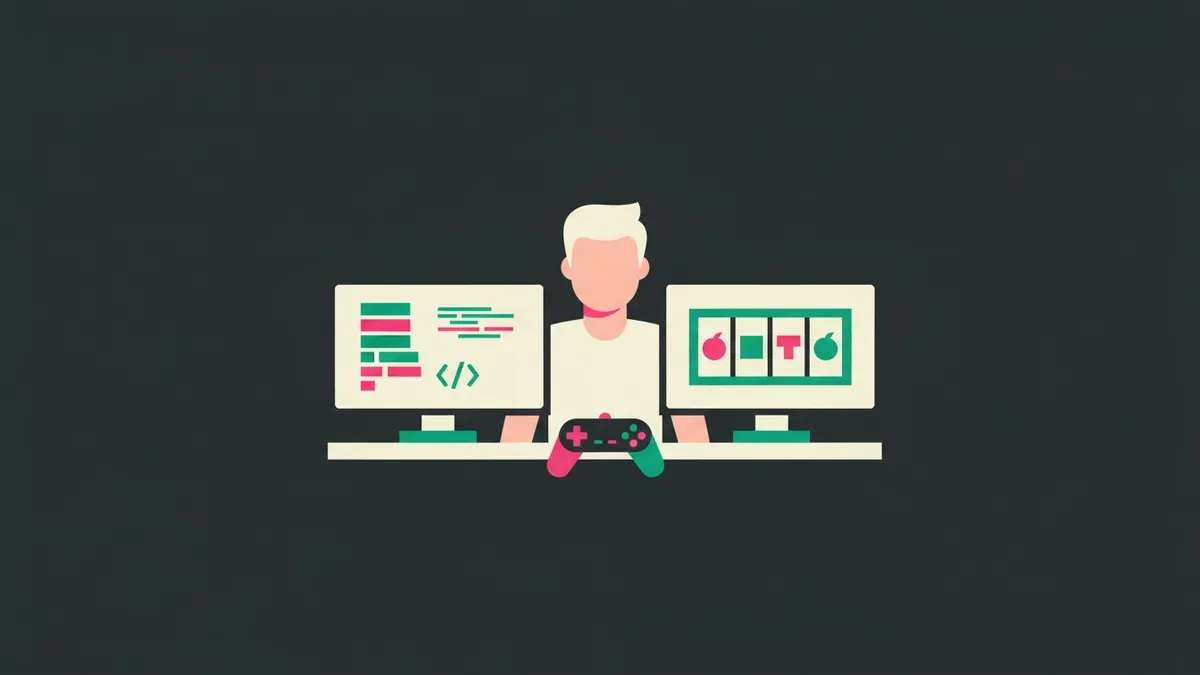
What the role involves
A Game Developer in iGaming isn't building an entertainment game but a certifiable product: every outcome is computed on the server, and the client only displays the result. That imposes strict requirements — determinism, round reproducibility, support for dozens of languages and currencies, and smooth performance on low-end mobile devices. The typical stack is Unity/C# or TypeScript with PixiJS/Phaser, WebGL, and communication with the maths engine over the studio's protocol.
Responsibilities
- Develop the client side of slots and game mechanics
- Integrate with the game server and the maths engine
- Optimise for mobile devices and poor network conditions
- Support multiple languages, currencies and jurisdiction requirements
- Prepare builds for certification at test labs
- Fix defects raised by QA and certification bodies
How performance is measured
- Release velocity
- Number of defects found after certification
- Game performance on target devices
Skills required
Professional skills
- Unity + C# or TypeScript + PixiJS/Phaser
- WebGL and rendering optimisation
- Git, CI/CD
- Understanding of RNG and the server-side game model
- Technical English
Soft skills
- Attention to detail
- Working in tandem with the mathematician and the artist
- Patience with certification cycles
Tools
Languages: English B1+ for working in an international studio.
Check your pay
Game Developer (Unity / HTML5) · Middle · Malta
SpinHire mid-level benchmark: . Ads with a stated range for this role: fewer than 5, the band is derived from related roles and the region. € per month, gross, excluding bonuses.
How pay grows over time
- Training 6–12 months
- Junior under 2 years €2 600
- Middle 2–4 years €4 500
- Senior 4–7 years €6 500
- Head / Lead 7+ years or a team €9 500
The next level pays +€2 000 a month on average.
Timing is an expert estimate: training or an adjacent role to get in, then seniority levels by years of experience.
Jobs paying above the median
Send me «Game Developer (Unity / HTML5)» jobs from €4 500
Once a week, on Mondays. Email confirmation, one-click unsubscribe.
Pay: salary bands by seniority
Ranges are in euros per month, gross (before tax), excluding bonuses. The data comes from industry job postings and offers reported by candidates; figures are a benchmark, not a guarantee.
Malta & Cyprus
| Level | Salary range, €/month | Median |
|---|---|---|
| Junior | €2 200 – €3 000 | €2 600 |
| Middle | €3 800 – €5 200 | €4 500 |
| Senior | €5 500 – €7 500 | €6 500 |
| Head / Lead | €8 000 – €11 000 | €9 500 |
Poland, Romania, Baltics
| Level | Salary range, €/month | Median |
|---|---|---|
| Junior | €1 600 – €2 300 | €1 950 |
| Middle | €2 800 – €4 000 | €3 400 |
| Senior | €4 500 – €6 000 | €5 250 |
| Head / Lead | €6 500 – €9 000 | €7 750 |
Remote · Tbilisi, Yerevan, Kyiv
| Level | Salary range, €/month | Median |
|---|---|---|
| Junior | €1 300 – €2 000 | €1 650 |
| Middle | €2 500 – €3 800 | €3 150 |
| Senior | €4 000 – €5 800 | €4 900 |
| Head / Lead | €6 000 – €8 500 | €7 250 |
Bonuses: Usually 5–15% annually or release bonuses. Some studios offer a share of a game's success.
How to break into the profession
From game development outside gambling (mobile and casual games) or from front-end with strong graphics skills. The barrier to entry is lower than it looks: the industry actively recruits developers from mainstream game dev.
Working hours: 5/2, with plenty of remote openings. Peaks come ahead of certification and release.
Market demand: High and sustained demand: new slot studios are appearing faster than developers with experience of certifiable games.
Where to grow next
Live jobs: Game Developer (Unity / HTML5)
FAQ
Do I need gambling experience to get into a slot studio?
No. Studios readily hire developers from mobile and casual game dev — the specifics of RNG and certification are taught on the job.
Unity or HTML5?
Both stacks are alive and well. Unity is more common at studios doing 3D and live mechanics; TypeScript + PixiJS dominates classic slots built for mobile web.
Related roles
More in Game development
Hiring a Game Developer (Unity / HTML5)?
Post a job for €49: it goes into search, into the Game development department and onto this page.
Post a job →