 spinhire
Briefly: a live casino is a TV studio that streams a real gaming table to operators around the world. One dealer is on camera; off camera there are shufflers, pit bosses, video engineers, a game integrity team, chat moderators and shift managers. Studios run around the clock and hire people with no experience, which makes them one of the easiest ways into the industry.
You have probably caught a glimpse of it: an ad or a stream where a smiling person at a green table deals cards while numbers flash across the screen. It looks like a TV show. Which raises the question: where is this filmed, who are these people, and how do they work so many shifts in a row?
That is usually where the curiosity ends. The topic feels closed off, a little shady, and few people imagine that behind that shot sits a large production with dozens of professions.
But it does. Live casinos are TV studios that run 24/7 and hire people in batches, often with no experience. Let me walk you through how they work technically, who earns from whom, which jobs are needed behind the camera and what they pay.
What the player sees on screen and what is really going on
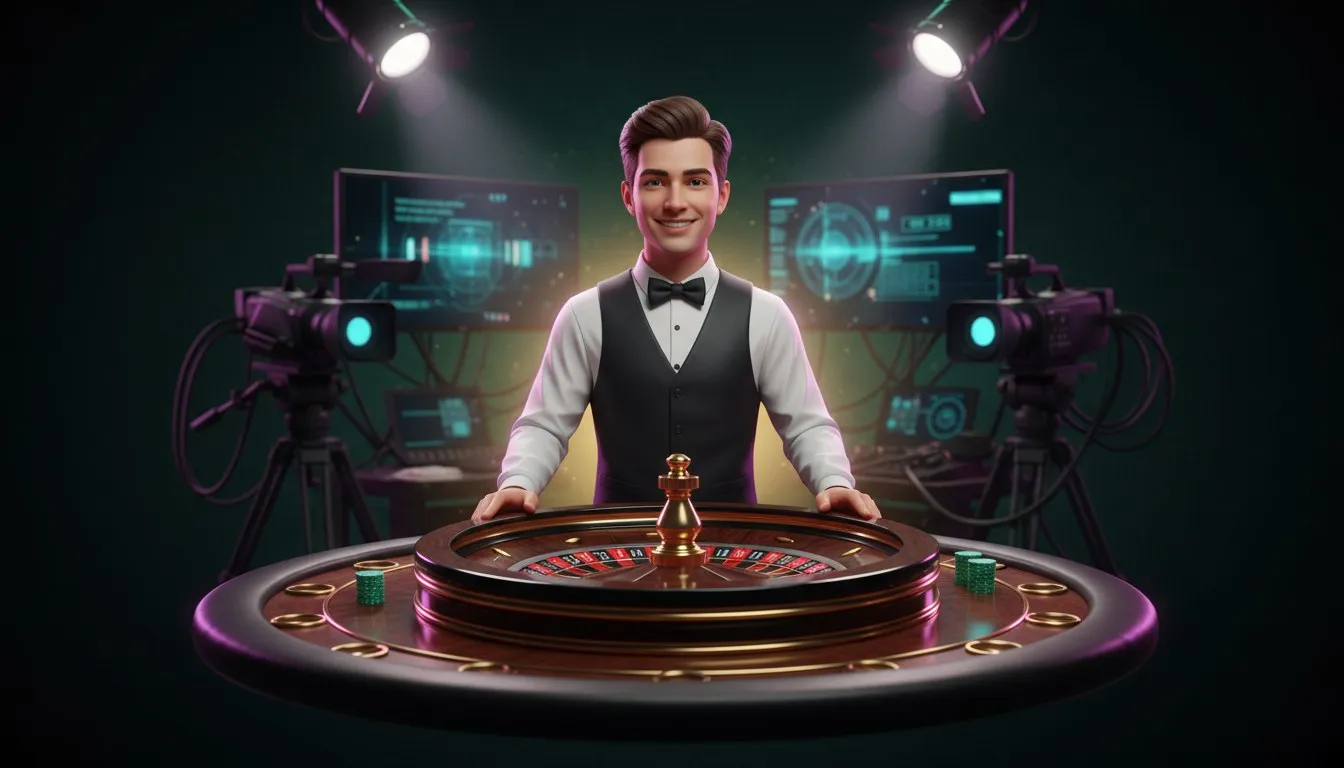
On screen there is a dealer, a table and betting buttons. In reality it is a studio floor with dozens of such tables. Each sits in its own booth with lighting, a backdrop and several cameras, and dealers rotate on a schedule, like presenters on air.
The main trick is turning a live event into a digital result. Cards pass through a scanner or are recognised by a camera, and sensors in the wheel read the roulette number. In a fraction of a second the system records the outcome and sends it to the interface.
Bets, however, are taken not by the studio but by the operator's website. The studio only sees the aggregate picture and the chat. Money, player verification and payouts stay with the casino brand.
There are also game shows: a wheel with a host, studio sets, several cameras at different angles. This is closer to television, and the people working there include broadcast directors, game mechanics writers and set designers.
All of this has to reach dozens of countries with minimal delay. That is why a studio has its own broadcast team: video encoding, backup channels and picture quality monitoring across markets.
Studio, provider, operator: who earns from whom
The studio is owned by a game provider. The best known are Evolution, Pragmatic Play Live and Playtech Live. They sell access to their tables to hundreds of operators, who show those tables on their own sites under their own brand.
The operator pays the provider a share of the revenue from these games. So it pays for a studio to keep as many tables open as possible, around the clock and in as many languages as possible.
Hence the geography. Big studios are located where there are people with the right languages, a reasonable cost of living and clear regulation: Riga, Tbilisi, Yerevan, Bucharest, Malta. When it is night in Europe, the tables keep running for markets in other time zones.
There are also branded tables. An operator orders a dedicated table in its own design, with dealers who speak the language of its market. These tables cost more, and studios hire people with rare languages for them.
Languages matter a lot here. A German, Italian or Turkish table is opened for a specific market, and a dealer with that language is hard to replace. That is why language skills earn a premium, and studios spend years looking for native speakers of rare languages.
English remains the baseline: training, internal procedures and communication within the shift all run in English. English requirements by role are covered in detail in the article on what level of English you need in iGaming.
Inside a shift: one table, eight people
Picture an ordinary night shift. There is one dealer on camera, but a whole team works around the table, and without any one of them the broadcast stops.
The shuffler prepares the decks and makes sure the cards are always in order. The pit boss or shift manager is responsible for several tables: they resolve disputes, cover dealers during breaks and keep an eye on timing.
For a shuffler this is a responsible job: a faulty deck means voided rounds and an investigation. That is why every step is spelled out in detail, and newcomers are trained for a long time before they are allowed near a live table.
The video engineer and broadcast operator keep the picture running. If quality drops in one market, they switch the stream. A technician looks after the equipment: card scanners, wheel sensors, cameras and lighting.
A separate team monitors game integrity. It reviews recordings, checks disputed rounds and investigates any irregularities. Chat moderators work alongside them: they see what players write and remove abuse in time.
Above all of this are trainers who teach new dealers, shift planners and studio managers. Large studios also have stylists and make-up artists, because the dealer on camera is the face of the product.
A dealer's shift usually works as a rotation: an hour or an hour and a half on air, then a break, then another table. Voice, posture and smile are working tools, and studios take burnout seriously.
Why the result is almost impossible to fake
The first question everyone asks is whether something is rigged. In a licensed studio the control system itself answers that question.
Equipment is tested by independent labs such as GLI. Regulators like the Malta Gaming Authority and the UK Gambling Commission require recordings of every shift, incident logs and a clear procedure for when something goes wrong.
If the scanner fails to read a card or the ball jumps out of the wheel, the round is voided under a pre-defined rule. The dealer does not make that call on emotion, and that is exactly why the studio needs people behind the camera who know the rulebook by heart.
For an employee this means strict discipline. Phones stay out of the broadcast area, hand movements are drilled in training, and any deviation is logged. Some find it too rigid, but this is how the studio protects its licence.
Unlicensed products offer no such guarantees. If you are choosing where to work, check which licence the studio operates under: it is a question of both fairness and the stability of your pay.
The downsides nobody mentions at the interview
A studio is not an office with flexible hours. Shifts run around the clock, including weekends and holidays, and in the first months newcomers tend to get the awkward slots. You have to rebuild your sleep schedule from scratch.
The strain is not only on your voice. A dealer stands or sits in the same position under the lights for hours, repeats the same movements and keeps a composed face on camera. Without breaks and exercise, your back and vocal cords soon make themselves felt.
The chat can be rude. Moderators remove abuse, but the dealer still sees some of the messages. Studios teach you not to react and not to take it personally, and that skill takes time.
And finally, discipline. Cameras see everything, the rulebook covers every movement, and being late for a shift breaks the schedule for the whole floor. Those who value freedom over stability will feel cramped here. How to cope with a night rhythm is covered in the article on night shifts.
How much they pay on camera and behind it
The most common job is dealer. The figures below come from the Live Casino Dealer profession card in the SpinHire directory, in euros, gross per month.
| Level | Malta and Cyprus | Poland, Romania, Baltics | Tbilisi, Yerevan, Kyiv |
|---|---|---|---|
| Junior | €1500–2000 | €900–1300 | €700–1000 |
| Middle | €2000–2800 | €1300–1900 | €1000–1500 |
| Senior | €2800–3800 | €1900–2600 | €1500–2100 |
| Lead | €3800–5000 | €2600–3500 | €2100–3000 |
Dealing is always done in the studio, so the third column means an office in Tbilisi, Yerevan or Kyiv, not remote work. On top of the base salary come allowances for night shifts, language tables and performance.
Senior and lead on this ladder are already trainers, pit bosses and shift leads. They are paid for responsibility over several tables and for the people they train.
Next come operational roles. According to the directory, a casino operations manager in Malta and Cyprus earns €3500–4700 a month at middle level. Technical roles are counted under their own professions; all salary ranges are collected in the professions section of the directory.
How to get into a studio and where to grow next
Live studios are one of the few doors into the industry that are open to people with no experience. Casino experience is not required, but languages, how you look on camera, clear speech and readiness for shift work matter.
- Dealer. Training is paid by the studio and usually takes a few weeks. Market languages are valued: German, Italian, Spanish, Turkish and others. More on getting in, in our breakdown of working as a live casino dealer.
- Shuffler and technical assistant. An entry point for those who do not want to be on camera. From here people move into technical and operational roles.
- Chat moderator and support. You need a language and a calm temperament. A good start for those who later move into operator support or compliance.
- Video and tech. People with experience in television, streaming or equipment operation are hired eagerly and paid more.
The typical career path is dealer, then trainer or pit boss, then shift manager and studio manager. Another branch is leaving the studio for an operator: support, VIP or game content management.
Studio experience is valued beyond the studio too. Someone who has spent a few years on air knows how to carry themselves on camera, follow procedures and stay calm under stress. These skills are useful in any customer-facing role.
At a studio interview you are usually asked to read a text to camera, your language is tested and you are asked whether you are ready for night shifts. Sometimes you get a trial run with cards or chips. A neat appearance and calm speech matter more than any CV.
One detail few people think about in advance: some studios help with relocating to the studio's city. If you are ready to move countries, ask about it right away; it may be part of the package.
Fresh openings for newcomers are collected in the section jobs with no experience required. Look at the studio's city, the schedule and the owner's licence.
That smiling person at the green table is just the tip of the iceberg. Behind them is a production where you can start with a deck of cards and, a few years later, run an entire studio.
FAQ
How does a live casino work?
A professional studio streams a real gaming table with a dealer. Cameras and a card or number recognition system turn every event into a digital result that instantly reaches the operator's interface. The studio belongs to a provider, and casino brands connect its tables as a supplier.
Who works in a live casino studio besides the dealer?
Shufflers, pit bosses and shift managers, video engineers and broadcast operators, game integrity specialists, chat moderators and support, dealer trainers, shift planners, and technicians for equipment and card recognition.
How much does a live casino dealer earn?
According to the SpinHire directory, a junior in Malta and Cyprus earns €1500–2000 a month, a middle €2000–2800. In Poland, Romania and the Baltics a junior earns €900–1300, in Tbilisi and Yerevan €700–1000. On top of that come allowances for night shifts and language tables.
Can a live casino result be faked?
In a licensed studio the equipment is certified by independent labs, every shift is recorded, and a separate team monitors game integrity. Regulators such as the MGA and the UK Gambling Commission audit these processes. Unlicensed products offer no such guarantees.
Industry events
- World Lottery Summit 2026 · 09.11.2026 · Sydney
- GIG Conference 2026: Gaming In Germany · 10.11.2026 · Berlin
- SPiCE International 2026 · 12.11.2026 · Cebu
Read also
 CareersLive casino dealer (game presenter): jobs with no experience, salary and who hires
 CareersNight shifts in casino support: how much extra you get and how not to burn out
 CareersGame Content Manager: who builds the casino lobby and what the job pays
 CareerHow to quit an iGaming company without burning bridges
 CareerNDA and non-compete in iGaming: what you're signing and what's at stake
 DataRemote work in iGaming in numbers: how many jobs, in which roles and countries
 CareerIs iGaming a good career in 2026: salaries, stability, exits